You can decide what it says about me, but I do enjoy the occasional fast-food experience. I use the word "experience" because fast food is more than just the food, it's a revolutionized, quintessentially American experience.
I recently took my daughter to a newly remodeled McDonald's near my house because it was time for lunch, and who doesn't enjoy a Big Mac and a Coke? What I stepped into, however, was not the McDonald's that I grew up with.
Gone were the friendly faces that I'd become used to in my childhood. In fact, no one greeted us or said anything when we walked in. To accompany the silence, we were greeted by towering digital kiosks. The millennial in me loved the self-service and the ability to order food without needing to talk to someone, while also being able to put in my specialty demands just right without being judged for my custom order options. (Side note—I think the McDonald's loyalty rewards program is the best one out there; check it out if you want to see what a top-tier rewards program could look like.)
After placing our order, we took a number and went to find a table. The dining area showed a clear difference in the renovation. It had been "optimized" with more standing room, fewer tables, less comfortable chairs, and plain walls. To put it another way: I felt like I was living in a dystopian robot movie.
There was only one other family there while we were eating, whose presence made me aware that there wasn't even background music playing. At least the food would be predictable and the same every single time (it was).
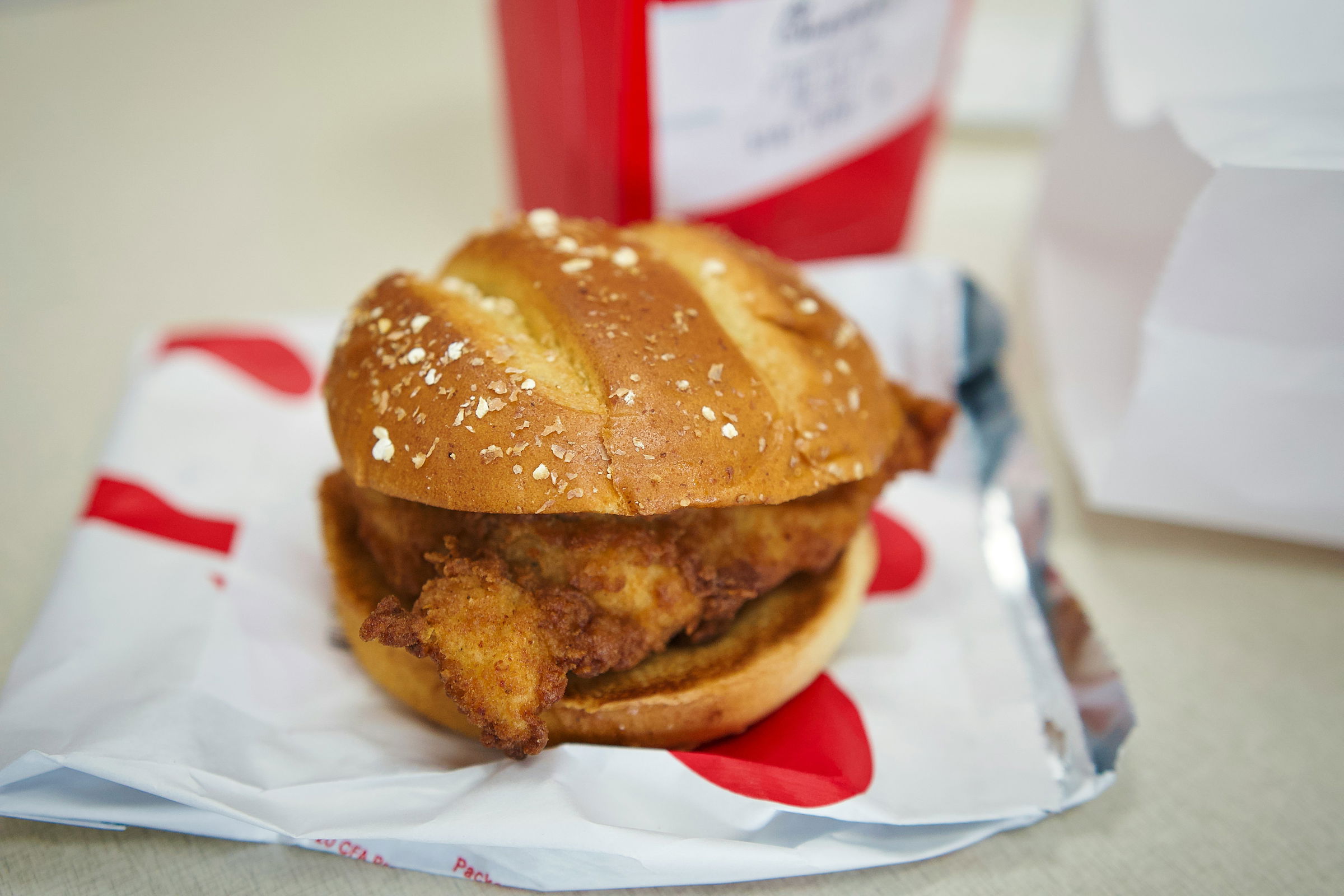
I couldn't help but compare this to our fast-food mainstay—Chick-fil-A (I love em dashes and semicolons; if AI starts using semicolons in every sentence you know they are training from me). Every time we go, the place is packed; nearly every table is occupied with a gentle hum of conversation filling the air. Here's a recent encounter: within minutes of sitting down (to order on my mobile app because I'm still a millennial), a team member approached our table, asking if we needed anything. When my daughter accidentally dropped her ketchup, the same person appeared with napkins and offered to refill our drinks. They also appeared a bit later and asked if my daughter wanted to trade in her unopened toy for an ice cream (this is a good hack for those of you who are unaware). When we thanked him, we were met with "my pleasure."
Same industry. Same basic function. Completely different philosophies about what customer experience should be.
After writing about The Authenticity Advantage and how businesses risk commoditizing themselves through thoughtless automation, seeing these two strategies play out in real time felt like watching a live case study in corporate decision-making.
The Tale of Two Automations
McDonald's has made their choice crystal clear. Every recent innovation seems designed to minimize human interaction: an amazing mobile app, kiosk ordering, table service via number pickup, and dining spaces that feel more like airport terminals than restaurants. It's efficiency optimization at its purest: streamlined, predictable, and scalable. It's an experience built for drive-thru.
Chick-fil-A has made the opposite bet. They've embraced technology (mobile ordering, table service) but wrapped it in human warmth. The app doesn't replace interaction; it enables more meaningful interaction. The team member walking the dining room isn't there to police the space—they're there to enhance your experience.
Here's what struck me: both approaches work, but they serve completely different business strategies. I'm sure McDonald's cost of labor is tempting to fast food competitors, but what does the bottom line look like when comparing the revenue lost due to fewer diners?
McDonald's is optimizing for volume, speed, and cost control. They're building a machine that can serve millions of transactions with minimal labor variation. Walk into any McDonald's anywhere in the world, and you'll get the same streamlined, efficient, somewhat sterile experience.
Chick-fil-A is optimizing for loyalty, differentiation, and premium pricing. They're building a brand that people choose not just for convenience, but for how it makes them feel. It's why they can charge more for chicken and still have lines out the door.
The Business Lesson Hidden in Plain Sight
What these restaurants demonstrate isn't really about technology at all. It's about strategic clarity.
McDonald's knows exactly what they are: an efficient food distribution system that happens to have tables. Their automation strategy aligns perfectly with this identity. Why would you want a chatty cashier when you're optimizing for speed, consistency, and profit margin?
Chick-fil-A knows exactly what they are: a hospitality company that happens to serve chicken. Their technology strategy supports human connection rather than replacing it. Why would you automate away the very interactions that create customer loyalty?
The problem most businesses face isn't choosing the wrong technology; it's trying to be both things at once.
I see this constantly when working with organizations implementing AI solutions. Leaders want the efficiency gains of automation AND the relationship benefits of human touch. They want to cut costs AND increase customer satisfaction. They want to scale like a tech company AND maintain the intimacy of a boutique firm.
Pick one. You can't optimize for everything.
The Uncomfortable Truth About Automation Choices
Here's what the McDonald's versus Chick-fil-A comparison really reveals: every automation decision is also a brand decision.
When you choose to automate customer-facing processes, you're telling your customers that efficiency matters more than relationship. When you choose to keep humans in the loop, you're telling them that experience matters more than speed.
Neither approach is inherently right or wrong. But pretending you can have both is where businesses get into trouble.
The companies that thrive in the next decade won't be the ones with the most sophisticated AI or the most human touch. They'll be the ones with the clearest strategic vision about which they prioritize and the discipline to stay consistent with that choice.
What This Means for Your Business
Whether you're implementing AI chatbots, automating workflows, or digitizing customer touchpoints, ask yourself: what business are we really in?
If you're in the efficiency business (if customers choose you primarily for speed, convenience, or price) then lean into automation. Make it seamless, make it fast, make it predictable. Don't apologize for optimizing the human elements out of the experience.
If you're in the relationship business (if customers choose you for expertise, trust, or experience) then use technology to amplify human capabilities, not replace them. Make your people more informed, more available, more valuable.
But don't try to split the difference. A half-automated, half-personal experience satisfies no one. It's the business equivalent of lukewarm coffee—technically functional, but nobody's first choice. Ask Wendy's how that works.
The McDonald's near my house made their bet. The dining room stays mostly empty, but the drive-through line wraps around the building. They've optimized for their customers' real priority: getting food fast.
Chick-fil-A made a different bet. Their dining room stays packed (so does the drive-thru, for that matter) because people want to be there. They've optimized for loyalty over efficiency, relationship over speed.
Both strategies work. But only when you pick one and commit to it completely.
The question isn't whether automation is good or bad for your business.
The question is: what kind of business are you choosing to be?
Want to catch up and chat about fast food? At Woz Digital, we help organizations leverage AI strategically while preserving what makes them uniquely human.